



Завантаження...

Bacteriofages delivery by courier and delivery service «Nova Poshta». Place orders by phone 0-800-307-407
  • Image slide 0
  • Image slide 1

Indications for use

The experience of colleagues physicians in application of phago-products will help to choose the optimal prevention and treatment regimen for a particular infectious disease

Image Cystitis

Cystitis

Treatment of cystitis with bacteriophages is advisable for both acute and chronic forms of the disease, especially when traditional uroantiseptics and antibiotics are ineffective. Common pathogens of infectious cystitis are destroyed by bacteriophages, wh

Image Cold

Cold

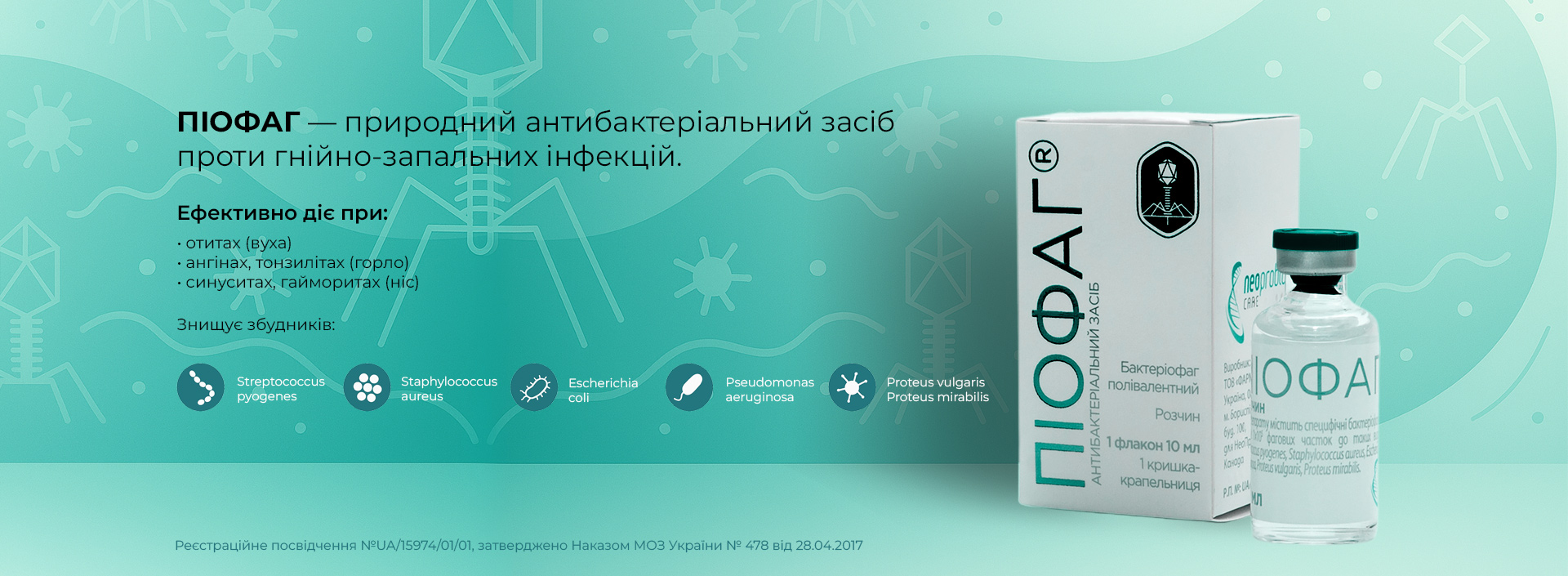
Representatives of opportunistic human flora often demonstrate multiple resistance to antibiotics. The use of bacteriophages in the treatment of purulent-inflammatory diseases of the ear, nose and throat allows not only to eliminate the infection, but als

Image Stomatitis

Stomatitis

When treating stomatitis, it is important to ensure disinfection of the oral cavity, eliminate pain and inflammation, and prevent the spread of infection. For the prevention and treatment of stomatitis, bacteriophage preparations are used, in particular t

Image Acute intestinal infection

Acute intestinal infection

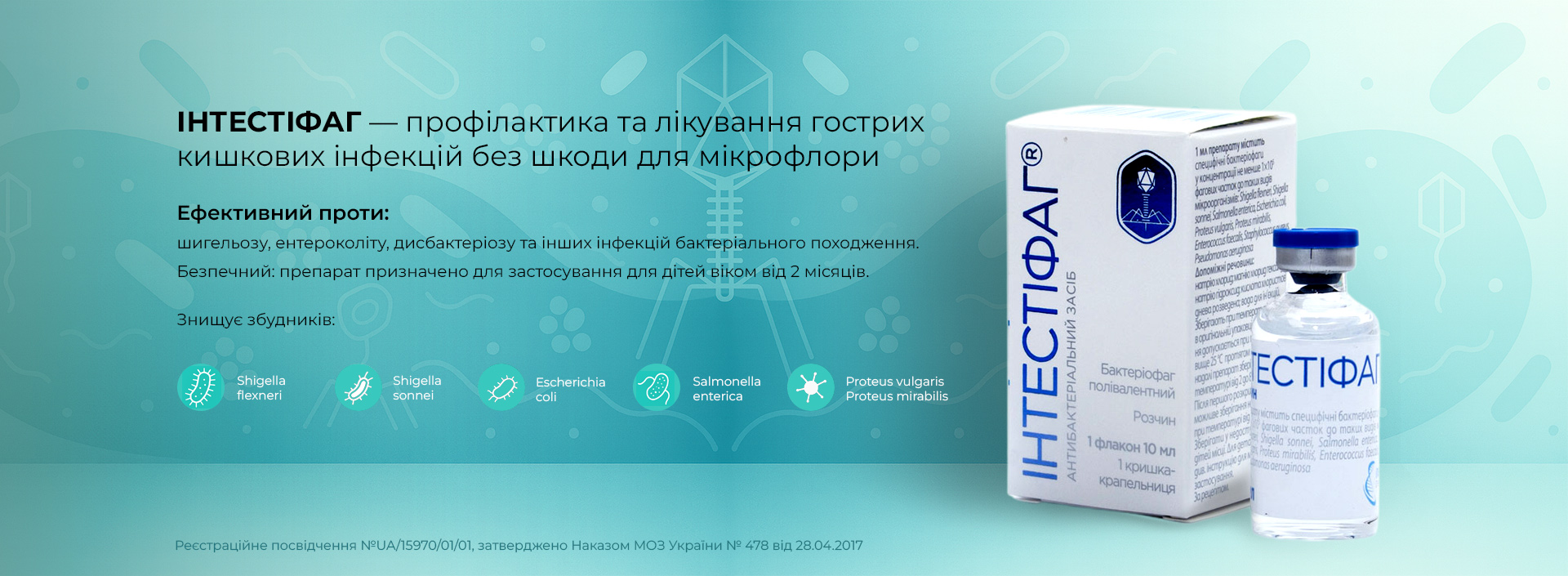
Antibiotics for intestinal infections are prescribed only in the most severe cases. Most often, so-called intestinal antiseptics are used - drugs that act only in the intestinal lumen and are not always effective. An alternative to traditional antibacteri

Image Wounds, burns, ulcers

Wounds, burns, ulcers

For the prevention and treatment of purulent septic complications of wound processes, bacteriophages are used, in particular the drug Pyofag®. The drug has a bactericidal effect against a number of common pathogens, including antibiotic-resistant ones.

Image Dysbacteriosis

Dysbacteriosis

To eliminate opportunistic microflora, it is advisable to use appropriate bacteriophages. Phage preparations are highly specific - they destroy only certain bacteria without affecting beneficial microflora.

Get access
to bacteriophage therapy

Register to receive additional information about phage therapy and phage preparations. Be sure to include your phone number so that we can contact you. Later, registered users will have access to the materials in the "For specialists" section, as well as an electronic newsletter and invitations to specialized events

Don't worry: Your personal data are safe

Phage therapy - is a field of medical microbiology, which is now actively developing and is the subject of numerous scientific and clinical studies, the "hot topic" of medical forums and congresses.

02.07.2026

Ridkisnyy vypadok likuvannya mukovistsydozu: yak fahy dopomohly antybiotykam podolaty Pseudomonas aeruginosa 105 A rare case of cystic fibrosis treatment: how phages helped antibiotics overcome Pseudomonas aeruginosa

In a new study, scientists described a unique case of treating a patient with cystic fibrosis whose chronic lung infection was caused by the bacterium Pseudomonas aeruginosa. When standard antibiotics failed, doctors used combination therapy—antibiotics combined with bacteriophages. A most interesting development occurred during treatment: the bacteria diverged into different groups with different survival strategies. Some became more vulnerable to antibiotics, others to phages.

26.06.2026

Bacteriophages against autoimmune diseases? New research reveals unexpected possibilities for phage therapy

Bacteriophages can combat more than just infections. In a new 2026 study, scientists used phages against a specific strain of Klebsiella pneumoniae, which is associated with the development of autoimmune inflammation. After eliminating these bacteria, symptoms of the disease significantly decreased. This opens the prospect of using phage therapy not only as an alternative to antibiotics but also as a tool for precisely targeting the human microbiome and immune system.

19.06.2026

RNA barcoding reveals previously unknown relationships between phages and bacteria

Bacteriophages can interact with a much wider range of bacteria than previously thought. Researchers from Rice University have developed a new RNA barcoding method that allows them to literally "label" bacteria that have received genetic material from phages and track these processes directly in natural microbial communities.