Завантаження...

Bacteriofages delivery by courier and delivery service «Nova Poshta». Place orders by phone 0-800-307-407

Publications

14.07.2025

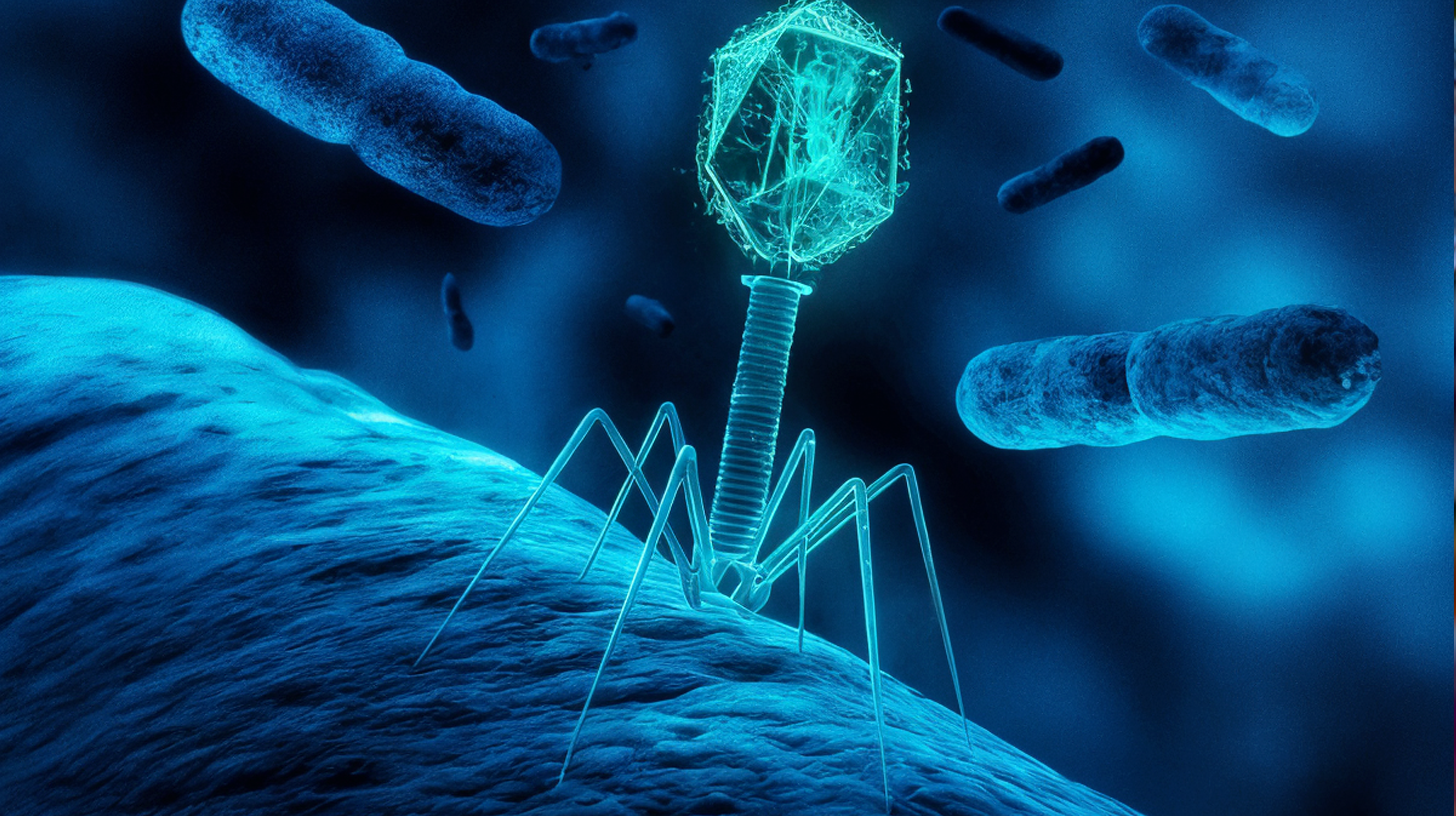
How do bacteriophages differ from viruses and antibiotics?

This article explains how bacteriophages differ from viruses and antibiotics. It discusses their principles of action, the advantages of phages over antimicrobial agents, and the reasons why interest in phage therapy is rapidly growing.

11.07.2025
08.07.2025

Can phages be considered an effective remedy for dysbiosis?

This article examines the potential of bacteriophages in the treatment of intestinal dysbiosis as a safe and targeted alternative to antibiotics. It explores the mechanisms of phage action, their advantages, their adaptability to resistant strains, and their ability to restore normal microflora without harming the body.

05.07.2025

What are the features of bacteriophage reproduction?

This article explains how bacteriophages—viruses that infect bacteria—reproduce. It examines their cycle types, genetic adaptation, role in ecosystems, and potential for phage therapy. It also explains why phages are considered safe for humans and could become an alternative to antibiotics for treating resistant infections.

02.07.2025

Why has phage therapy not yet become the standard of treatment in the world?

Phage therapy—a method of treating bacterial infections using bacteriophages—is considered a potential solution to the problem of antibiotic resistance. However, due to numerous legal, scientific, and organizational barriers, it has not yet become a part of global medical practice. This article examines in detail the main reasons for this phenomenon: from patenting issues and the lack of a regulatory framework to mistrust in the medical community and the complexity of clinical trials.

25.06.2025

How bacteriophages can help treat asthma and allergies

This article explores the potential of bacteriophages—viruses that infect bacteria—as new therapeutic agents for the treatment of asthma and allergies. It examines their mechanisms of action, their impact on the microbiome and immune system, initial research results, and the prospects for phage therapy as a safe and personalized alternative to traditional treatments.

22.06.2025

How phage therapy stimulates the development of science, medicine and biotechnology

Phage therapy is a medical field that uses bacterial viruses (bacteriophages) to fight infections. After decades of neglect, interest in phages is reviving amid the global rise in antibiotic resistance. This article explores how phage therapy is stimulating advances in genetics, pharmacology, and synthetic biology, ushering in a new era in medicine—one where viruses become human allies.

19.06.2025

The virus that saves: modern treatment for Salmonella enterica without harm to the microbiome

Salmonella enterica is a dangerous bacterium that causes intestinal infections and systemic complications. Traditional antibiotic treatment faces the problem of resistance, necessitating the search for alternative solutions. Scientists are exploring the use of bacteriophages—viruses that selectively destroy bacteria without disrupting the human microbiome. This article examines the advantages, challenges, and prospects of phage therapy against Salmonella enterica.

16.06.2025

Shigella flexneri and phage therapy: practical experience in the use of “good viruses”

Shigella flexneri is a bacterium responsible for one of the most common intestinal diseases, shigellosis. Due to growing antibiotic resistance, traditional treatment is becoming ineffective. Phage therapy, a method using bacteriophage viruses capable of selectively destroying pathogenic bacteria without harming the surrounding microflora, is emerging as a solution. This article examines the nature of the infection, the mechanisms of resistance in Shigella flexneri, and successful examples of phage use in medical practice.

13.06.2025

Helicobacter pylori: why this bacterium is out of control and how phages can help

This article describes the nature of the Helicobacter pylori bacterium , the reasons for its antibiotic resistance, and the role of bacteriophages as a potential alternative to traditional treatment. It examines the mechanisms of infection, associated diseases, the ineffectiveness of standard therapy, and current research and prospects for phage therapy against this microorganism.

10.06.2025

Urinary Tract Infections: The Most Dangerous Pathogens and How Phage Therapy is a Game Changer

Urinary tract infections (UTIs) are among the most common bacterial diseases. They often affect women, the elderly, and patients with catheters. The main pathogens are E. coli, Klebsiella pneumoniae, Proteus mirabilis, Enterococcus faecalis, and Pseudomonas aeruginosa. With increasing antibiotic resistance, traditional treatments are losing their effectiveness. Phage therapy, based on the use of bacteriophages—viruses that selectively destroy bacteria—offers a new solution that has shown impressive results in clinical trials.

07.06.2025

Fighting Enterococcus faecium: bacteriophages as the basis of treatment

Enterococcus faecium is a bacterium that has evolved from a harmless inhabitant of the intestines into one of the most dangerous causes of hospital-acquired infections. Due to resistance to antibiotics, including vancomycin, traditional treatments are becoming less effective. This article examines the mechanisms of infection, prevention methods, the development of resistance, and the potential for using bacteriophages as a new therapeutic strategy.

04.06.2025

Bacteriophages against the little-known but dangerous Proteus vulgaris

This article discusses the little-known but dangerous bacterium Proteus vulgaris, its resistance to antibiotics, and the challenges of treatment. It focuses on the potential of bacteriophages—viruses that only infect bacteria—as an alternative to antibiotics. Research results from India, Poland, and Georgia are presented, confirming the effectiveness of phage therapy against Proteus vulgaris.

01.06.2025

How bacteriophages could be useful in treating diseases caused by Proteus mirabilis

Proteus mirabilis is a dangerous bacterium that causes serious infections, especially in people with weakened immune systems. High antibiotic resistance makes treatment increasingly difficult. However, science offers an alternative: phage therapy. This article examines how bacteriophages can effectively kill Proteus mirabilis strains, disrupt biofilms, and restore the effectiveness of therapeutic treatments for infections.

29.05.2025

Resistance is not a death sentence: Acinetobacter baumannii and a chance of recovery thanks to phages

Acinetobacter baumannii poses a serious threat to modern medicine due to its resistance to antibiotics. This article examines the characteristics of the bacterium, its routes of infection, the diseases it causes, and the role of phage therapy in its treatment. It also presents scientific studies confirming the effectiveness of bacteriophages against resistant strains.

26.05.2025

Staphylococcus aureus (MRSA): can phage therapy stop the rapid spread of this bacterium

MRSA (methicillin-resistant Staphylococcus aureus) is a dangerous bacteria resistant to most antibiotics. It causes severe infections and poses a global public health threat. This article examines in detail why MRSA is so dangerous, how infection occurs, the diseases it causes, and how phage therapy—a method using bacteriophages—can become an effective alternative to antibiotics.

23.05.2025

Bacteriophages against Pseudomonas aeruginosa: a chance for recovery

With bacterial resistance to antibiotics growing, phage therapy—the use of viruses capable of destroying bacteria—is increasingly attracting the attention of scientists. Of particular interest is the treatment of infections caused by Pseudomonas aeruginosa, one of the most resistant and dangerous bacteria. This article examines the mechanisms of action of bacteriophages, their advantages, applications, and the results of modern research.

20.05.2025

Phage alternative to antibiotics: stories of the fight against Enterococcus faecalis

This article examines the problem of antibiotic resistance in Enterococcus faecalis and ways to address it using phage therapy. It describes the characteristics of the bacterium, the types of infections it causes, the reasons for its treatment difficulties, and real-life clinical examples of the successful use of bacteriophages in the fight against infections.